| Artist | Searows |
| Venue | Leeds Irish Centre |
| Date | 3 April 2026 |
| Opener | Belly of the Whale |
| Closer | Geese |
| Highlight | Dearly Missed |
| Undertone rating | 3/5 |
Searows’ beguiling new album provided the most compelling songs for this understated performance in Leeds. At his best, his broadly coastal-themed new songs sound windswept and epic. Other times, it’s more of a wishy-washy damp squib.
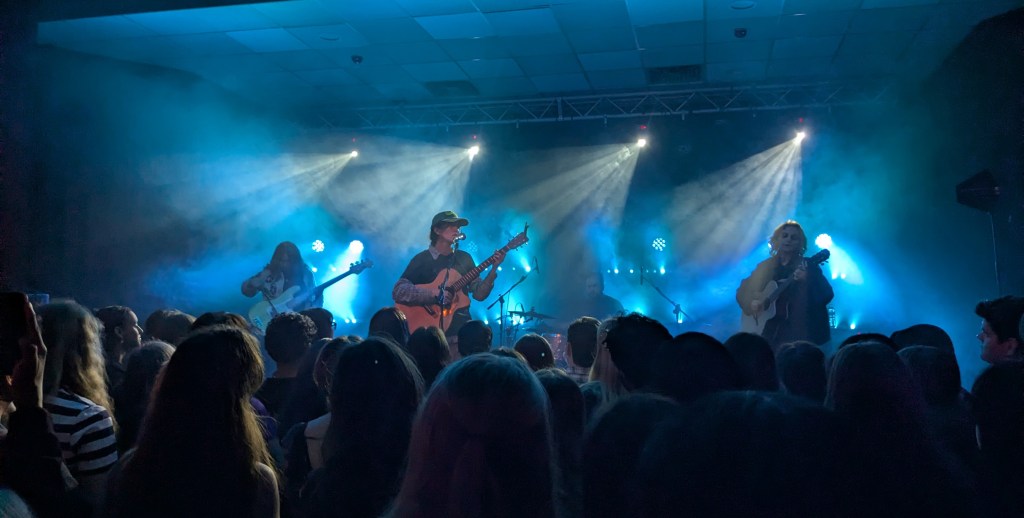
In between songs of Searows’ set at Leeds Irish Centre you can hear a pin drop. When singer-songwriter Alec Duckart does finally finish retuning his guitar and begins the next song, the crowd don’t sing, but stands there in rapt silence, phones firmly in pockets. When another delicately strummed ballad fades into nothing, they almost seem reluctant to break the peace by clapping. Amos Heart, tonight’s uplifting and utterly adorable support act, had earnestly instructed us to give Searows “all the love you have”, framing the venue as a sanctuary, a place for humans to embrace the quiet present moment together, momentarily sequestered away from “the wild word out there”. It seems his message as hit home; I’ve never known a crowd so attentive, so polite, so present.
A world away from the extra-terrestrial affront of bizarreness offered by Geese a few weeks ago, Searows is indeed the sort of contemplative, subtle music that demands close listening. His tender strumming and plaintive melodies put him loosely in the ‘indie folk’ genre, and his yearning vocals in particular fill a Phoebe Bridgers-shaped hole in contemporary music, the California singer’s two albums (some six and nine years old now) retaining an almost mystical power over an entire generation of new songwriters. There’s also something of Ethel Cain in Searows’ more morose tendencies, and Sufjan Stevens (or Britain’s current finest Jacob Alon) in his intricate finger picking and spaced-out vocals. The new Searows album, Death in the Business of Whaling, departed from reverb-drenched guitar-and-vocals numbers to a meatier full band approach. It winningly embraced a distinctly coastal aesthetic, not just in the title and the gorgeous cover art, but in the swirling drums, the frothy roil of guitars, and a lyrical sense of standing at the edge of something vast and unfathomable.
It’s a feeling that’s impressively transposed into the humble surroundings of Leeds Irish Centre, Duckart brooding in centre-stage amidst a thick pall of stage smoke lit in lurid sea green. His songs gently wash in and out like the tide. A resonant bowed bass guitar heralds opener Belly of the Whale, Duckart singing about being left abandoned at the bottom of an ocean as sonorous drums seethe and stew like a storm on the horizon. Photograph of a Cyclone is similarly hypnotic with its lilting guitar part which might have sounded chirpy if the lyrics didn’t evocatively describe said cyclone as a lonely “spirit […] wasting hours in outlaw country”.
Amidst it all, Duckart is unreadable, eyes hidden under his Oregon baseball cap. It’s a fitting clothing choice; there’s something undoubtedly Pacific Northwestern about every song he performs tonight – a sense of vast wilderness, untamed coastlines and lonely beasts roaming the forests. Dearly Missed is the new album’s centrepiece and it serves as tonight’s apex too, Duckart venturing boldly into the noisy ambient rock territory her heart-wrenching lyrics about death and abandonment often call for. The drums are weighty, the vocals are desperate, and the guitars sound utterly desolate. “She answers in the pouring rain / ‘I just don’t love you’” Duckart sings in the bridge, before a final ascent via a squally electric guitar solo and tidal wave of cymbals.
It’s a climax so epic it tends to overshadow Duckart’s less ambitious tracks, and slices from his drumless and somewhat featureless debut album like Roadkill and Coming Clean subsequently make little impact. By the time we reach House Song, a curiously humdrum TikTok hit, there’s a sense that we’ve already heard this song played a few times already tonight, complete with a now familiar strumming pattern and gently descending chord sequence. The Mary Oliver-referencing Geese attempts a final climb towards a grandiose finale, but this rendition lacks the dynamism and intricacy to really impress in its final moments. Duckart is not a vocalist known for his enunciation, and long periods of tonight are indecipherable, all the consonants cut out in favour of a formless wail of vowels.
In Leeds Duckart’s littoral compositions were more often mystifying than beguiling, but Searows’ more forthright new material suggests their best is yet to come. Boygenius-indebted In Violet and Junie close out the main set, Duckart at last pouring his heart out without restraint. “I have dreams where I’m grasping something out of my reach” he belts heartbreakingly as guitars swell and cymbals shimmer, and it’s as if the room itself reverberating. Duckart’s emotional purge is so intense it’s almost uncomfortable to watch. The crowd, of course, wait patiently for the final chords to fade, applaud calmly, and begin a courteous chant for an encore.
 Undertone
Leave a comment